The Planets in Astrology
Planets in astrology explained, from the Sun and Moon to Pluto. See what each planet rules, its keywords and how to read it in your own birth chart.
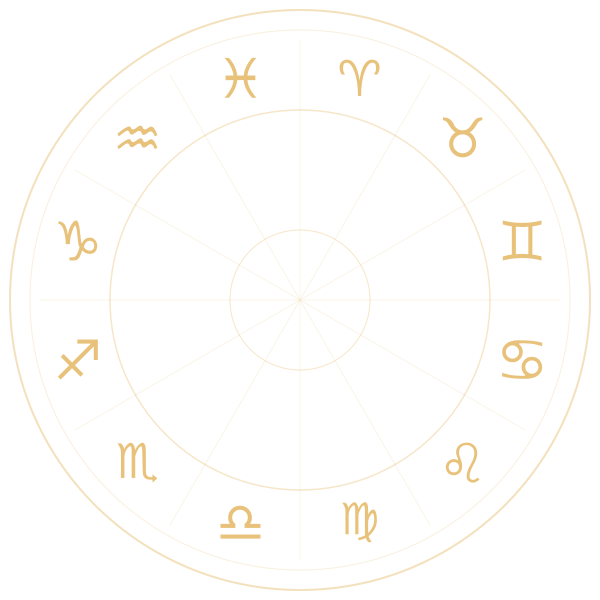

Planets in astrology each represent a different part of your personality, like characters in a story. The sign a planet is in describes its style, and the house shows where it acts. Here is what each one means and how to think about it in your chart.
The personal planets in astrology
These move fastest and describe your everyday personality. They are the most personal parts of your chart.
- Sun
- Identity, vitality and purpose. The sign most people know.
- Moon
- Emotions, instincts, comfort and what makes you feel safe.
- Mercury
- Thinking, communication, learning and how you process information.
- Venus
- Love, beauty, pleasure, values and how you relate to others.
- Mars
- Drive, courage, desire and how you take action.
The social planets
Jupiter and Saturn move more slowly and connect you to the wider world, describing how you grow and how you build structure.
- Jupiter
- Growth, luck, optimism, wisdom and where life expands.
- Saturn
- Discipline, responsibility, limits and long-term achievement.
The outer planets
Uranus, Neptune and Pluto spend years in each sign, so they say as much about your generation as about you. Their house placement is where they become personal.
- Uranus
- Change, freedom, originality and sudden breakthroughs.
- Neptune
- Dreams, imagination, compassion and spirituality.
- Pluto
- Power, transformation and deep renewal.
Rulerships: which planet rules which sign
Every sign has a ruling planet. Mars rules Aries, Venus rules Taurus and Libra, Mercury rules Gemini and Virgo, the Moon rules Cancer, the Sun rules Leo, Jupiter rules Sagittarius and Saturn rules Capricorn. In modern astrology, Uranus rules Aquarius, Neptune rules Pisces and Pluto rules Scorpio.
The planet that rules your Rising sign is called your chart ruler. It is one of the most important planets to read in your chart.
Further reading: an overview of planets in astrology and its history.
Planets in astrology: your questions answered
Are the Sun and Moon planets?
Not astronomically, but astrology traditionally calls them planets, or "luminaries", because they move against the background of the stars.
What is my chart ruler?
The planet that rules your Rising sign. For example, if you have Libra rising, Venus is your chart ruler.
What does a retrograde planet mean in a birth chart?
A retrograde planet appeared to move backwards from Earth when you were born. Many astrologers read it as energy that is more inward or reflective.
 What Is a Birth Chart?
 The Big Three: Sun, Moon and Rising Explained
 The 12 Houses in Astrology
Enter your birth date, time and city. It is free, private and takes less than a minute.